








Kathmandu : A student-centered initiative has been launched in Kathmandu to combat climate change through the control of plastic pollution. The Climate Smart School program has been introduced by the South Asian Youth for Sustainable Development (SAYS), with the support of the Konrad Adenauer Foundation (KAS).

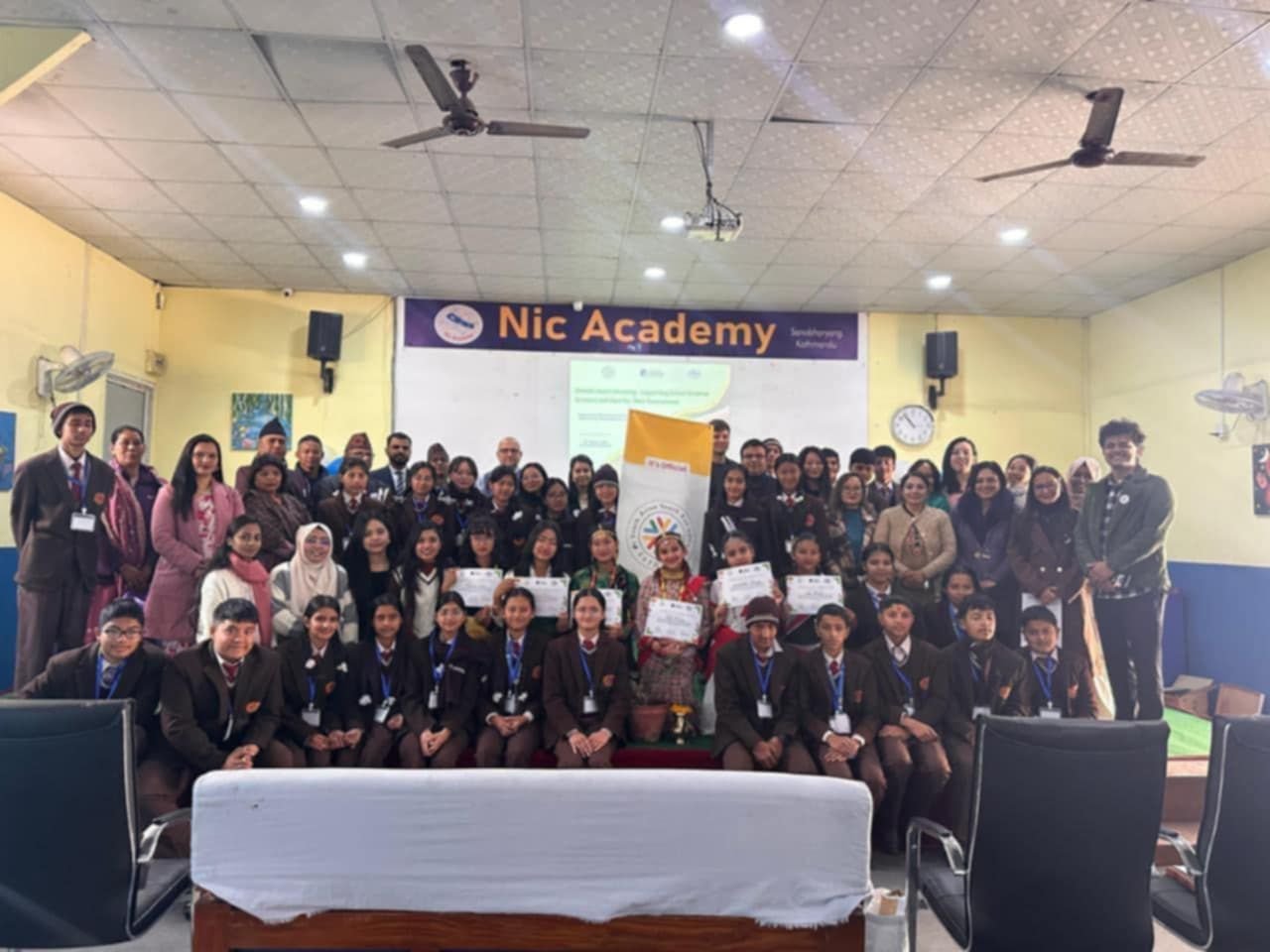
The initiative was launched on January 16 at NIC Academy in Sanobhyang, Kathmandu. The program saw participation from a SAYS team composed of KAS scholars from Nepal, India, and Afghanistan. During the event, KAS Director Dr Andreas Klein formally handed over weather-monitoring equipment, blue dustbins for plastic waste segregation, and student kits to the school.
According to SAYS, the growing burden of plastic waste is a direct and evident contributor to climate change. As addressing plastic pollution has now become central to climate action, the organization emphasized the urgent need for immediate action at the community level. The program also highlighted that recycling one kilogram of plastic can prevent up to four kilogram of carbon dioxide emissions.

The blue dustbins provided to strengthen source-level segregation of plastic waste will complement the green and red bins already in use at the school. Green bins are designated for organic waste and red bins for hazardous waste, while the blue bins will enable separate collection of plastic waste, making waste management more effective. This is also expected to facilitate plastic reuse and recycling. The project not only helps cutting carbon emission and encourage children to practice waste segregation at source but also contribute to the livelihoods and economy of informal waste workers are grassroot level by engaging them in this initiative.
Similarly, the weather-monitoring equipment will track temperature, rainfall, and extreme weather events. This system will enable the school to respond more effectively to climate-related risks.
Through the Climate Smart Club, students of NIC Academy will lead peer-based awareness programs on waste segregation, reuse, and responsible resource management. The student kits distributed to raise awareness about climate change and sustainable practices will help young people gain climate-related knowledge and become active forces against plastic pollution.
This initiative, aimed at strengthening climate resilience within the school community, seeks to promote long-term behavioral change that extends beyond the classroom. SAYS stated that the program highlights how climate resilience can be strengthened at the school level through informed students, practical tools, and regional collaboration.