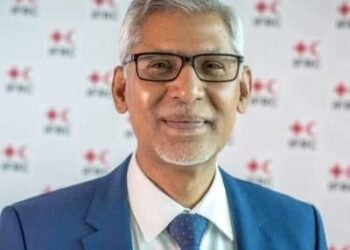



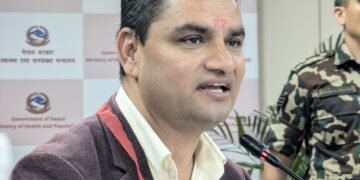
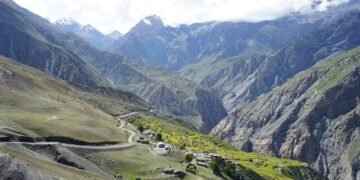


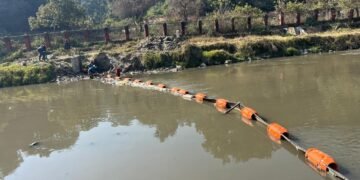


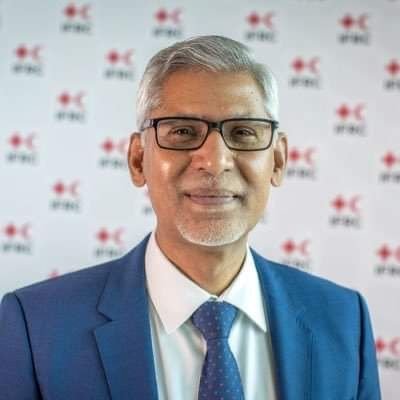
Kathmandu, Sept 14: Jagan Chapagain is Secretary General and Chief Executive Officer of the International Federation of Red Cross and Red Crescent Societies (IFRC). On 1 February 2020, he became the first Nepali and the first person from Asia Pacific Region to assume the role of Secretary General for a four-year term. On 1 February 2024, he began his second term in the same position. IFRC, a humanitarian network operating in 191 countries, works according to its mandate to support disaster risk reduction, emergency response, and humanitarian assistance for people affected by climate change, natural hazards, and human-made disasters. Last year, IFRC received the Sydney Peace Prize in recognition of its humanitarian work, shaped by Secretary General Chapagain’s long-term vision, strong implementation, and skilled leadership.

Engineer Chapagain entered humanitarian service more than four decades ago as a volunteer with the Nepal Red Cross. He has been involved in response and recovery during major disasters in many parts of the world. His work during the COVID-19 pandemic was praised globally. The phrase “Where there is disaster, there is Jagan” is already established on the world stage. During his first term as Secretary General, through his initiative and active engagement, the Nepal Red Cross received 30 new and 15 upgraded ambulances. IFRC also provided important support to the Nepal Red Cross during the devastating 2015 earthquake.
On the morning of August 26, while travelling by plane from Dubai to Geneva, he received news of the devastating flood in the Bhotekoshi River. From the aircraft, he immediately followed up and ensured the approval of USD 1.2 million through IFRC’s Disaster Response Emergency Fund (DREF) and called on Nepal Red Cross and IFRC teams to engage in search, rescue, and relief work.
The following are the main excerpts from senior editor of National News Agency Bishnu Nepal’s conversation with Secretary General Chapagain on the Bhotekoshi disaster.
Q: How do you view the Bhotekoshi disaster?
The flood in the Trishuli River, including Bhotekoshi, should not be viewed as an ordinary flood or flash flood. This is not simply a normal natural flood or landslide. It must be analyzed as a multidimensional humanitarian crisis. It was not merely an event in which the river’s water level rose. The entire river system—the Bhotekoshi-Trishuli watershed—has been devastated. Settlements, markets, infrastructure, and livelihoods were all destroyed at once within moments. This is a complex and different kind of disaster. It can be understood from three perspectives.
First, suddenness: it is not normal for the water level to rise suddenly by 8–10 meters within a very short time. In moments, houses, settlements, markets, bridges, roads, and hydropower projects were washed away. Communities had almost no time for early warning or preparedness.
Second, access: roads, bridges, communications, and electricity were damaged at the same time, making it difficult to reach the most affected settlements and greatly complicating rescue and relief.
Third, long-term impact: entire villages, market areas, infrastructure, agriculture, and the foundations of livelihoods were destroyed. This is not only an immediate humanitarian crisis but also a long-term recovery challenge. I view the Bhotekoshi disaster as a structural humanitarian crisis created by the combined effects of climate risk, geographical sensitivity, weak infrastructure, and inadequate preparedness.
Q: From being a Red Cross volunteer to holding the highest post of Secretary General, how are you providing humanitarian support in the Bhotekoshi disaster?
I began humanitarian service as a volunteer. Throughout my life’s journey, one thing has always stayed with me: in a disaster, immediate response always comes from the community itself. First responders are neighbors, communities, and local people. Therefore, local volunteers and Red Cross branches are central to rescue and relief in disasters. The role of the Secretary General is to empower volunteers and encourage them.
In the Bhotekoshi disaster, my direct role has focused on three levels:
First, strategic leadership: placing the Nepal Red Cross Society at the center and mobilizing the entire IFRC network toward the Bhotekoshi flood response. It will also focus on ensuring coordination and collaboration with other international communities, emergency appeals, technical support, mobilization of regional and expert teams, and setting a long-term recovery vision.
Second, resource mobilization: in my capacity as Secretary General, I will ensure coordination and communication with various donor agencies, Red Cross and Red Crescent Societies, and other institutions to mobilize the financial, technical, and humanitarian resources needed for Nepal. In particular, I will focus on ensuring support for long-term recovery through the emergency appeal.
Third, a message of unity and trust: I am conveying to Red Cross volunteers the message that “you are not alone; the global Red Cross and Red Crescent family stands behind you with support and solidarity.” This gives great psychological energy and strength to the volunteers and teams working day and night in difficult terrain on search and rescue, management of the deceased, and relief distribution. For me, this responsibility comes not only from the position of Secretary General but also from my experience as a volunteer. My role will focus on ensuring that the world community sees, understands, and stands with the pain of Nepal’s disaster over the long term. That is what I am working toward.
Q: What humanitarian support is IFRC providing or mobilizing in the Bhotekoshi disaster? Is this support sufficient? What benefit did the DREF provide in the initial days?
IFRC’s support is based on two main financial mechanisms and an expanded operational strategy. Immediate DREF support: DREF funding equivalent to CHF 1 million has been made available immediately to the Nepal Red Cross. This has enabled immediate rescue and relief for disaster-affected communities. Drinking water, tents, tarpaulins, blankets, sleeping mats, first aid supplies, stretchers, body bags for management of the deceased, and emergency hygiene kits were rapidly sent to and distributed in affected areas. Approximately 20,000 highly affected people are expected to benefit from this support.
IFRC has issued an emergency appeal of CHF 25 million for people affected by the flood. The aim is to provide long-term support to up to 200,000 people, including shelter, cash assistance, health care, mental health and psychosocial support, water, sanitation and hygiene services, family reunification, and livelihood recovery.
Q: Is this support sufficient?
DREF support helped meet the most critical initial needs of flood-affected people in the first phase. It enabled the Red Cross to begin work immediately with essential relief items for affected communities. However, for long-term recovery, it is essential to fully mobilize the resources requested in the appeal, strengthen coordination with all three levels of government in Nepal and other agencies, and invest in climate-safe reconstruction.
Because DREF was released on time, it helped the immediate flood response. Within a few days of the flood, affected people were able to use relief materials. Rescue teams were able to reach affected areas. This helped reduce the risks of premature death, disease, and further humanitarian suffering. It also helped build an atmosphere of trust, giving communities the feeling that “the state and the Red Cross are present” in a time of crisis, which helps reduce social tension and mistrust. The initial DREF operation also provided data and experience that made the larger emergency appeal more credible. Challenges remain, especially due to difficult terrain, damaged bridges and roads, and psychosocial trauma, but DREF and the appeal have laid the foundation to address them.
Q: What should the Bhotekoshi flood response plan look like? What can IFRC contribute?
When preparing a response plan for the Bhotekoshi flood, a long-term vision is essential. I believe the plan should be considered at four levels.
First, immediate response, from 1 to 3 months: this should include rescue operations and relocation to safe areas. Clear procedures are needed to move settlements along high-risk riverbanks to safer locations. This phase should cover shelter, water, health services, temporary accommodation, safe drinking water, first aid, basic health care, and procedures for managing the deceased.
Second, medium-term recovery, from 3 to 24 months: cash and livelihood support will be effective. Affected families need cash assistance, small-business recovery, and reinvestment programs in agriculture and livestock. Mental health and psychosocial support should also be included to address trauma, grief, and long-term stress.
Third, long-term risk reduction: climate-conscious infrastructure reconstruction is necessary. Bridges, roads, markets, and settlements should be rebuilt with consideration of risks such as high water levels and possible glacial lake outburst floods. Community-based early warning systems must be strengthened. Sensors in the upper river basin, information flow, and community-level response plans are necessary.
Finally, policy and financial structures: reconstruction linked to climate finance should be pursued. Reconstruction projects should be designed as climate adaptation initiatives, and efforts should be made to mobilize resources from international financing mechanisms.
IFRC can contribute by providing resources and technical guidance on risk analysis, community-based disaster management, early warning systems, mental health programs, and cash-based response. Successful flood-response experiences from other countries can also be implemented in Nepal through coordination with international and regional networks. Practices such as community-based reconstruction and construction through local user committees can be applied. Through the emergency appeal, the resources needed for long-term recovery will be raised, and donor agencies will be mobilized to expand cooperation under the leadership of the Nepal Red Cross.
Q: What difference do you see in IFRC’s role in the context of the devastating 2015 earthquake and the Bhotekoshi flood?
Although both disasters were devastating, their nature, geography, and response complexity are different. Therefore, some clear differences can also be seen in IFRC’s role.
The nature of the disasters is different. In the 2015 earthquake, there was structural damage across 14 districts, buildings collapsed, displaced people needed resettlement, and long-term reconstruction was required. In the current Bhotekoshi flood, settlements along the riverbank, markets, bridges, hydropower facilities, roads, and other infrastructure were swept away in moments. The geography is complex and access is difficult. The affected area includes settlements along the Bhotekoshi-Trishuli River and development infrastructure. The operational model is different. In the earthquake, there was a long-term reconstruction program with extended engagement in housing, schools, health institutions, and community-based recovery.
In the Bhotekoshi flood, because of the nature of the flash flood, emphasis has been placed on rapid response, high mobility, and risk reduction linked to the river system. The pace of resource mobilization has also been extremely fast. In the Bhotekoshi flood, DREF and the emergency appeal were activated very quickly. The DREF first and then the 24-month appeal made immediate rescue and response possible by applying lessons learned. The climate dimension of these two disasters is different. The earthquake was mainly a natural disaster, whereas the Bhotekoshi flood is linked to factors such as climate change, possible high-Himalayan outburst events, and extreme rainfall. This has brought IFRC’s climate adaptation and risk reduction work directly to the center. In this sense, the Bhotekoshi flood response has the potential to become an important model of climate-sensitive humanitarian response for IFRC.
Q: What complexities do you see in the Bhotekoshi flood response? What kind of programme should the Government of Nepal formulate? What are your suggestions?
Compared with other disaster responses, I see the Bhotekoshi flood response as extremely complex. The response is complicated by geography and access, structural damage to infrastructure, and long-term livelihood crises. Remote mountain geography and riverbank settlements are themselves highly complex. In addition, damaged roads and bridges have made access difficult, complicating rescue and relief operations. Response and recovery will also remain complex.
There has also been structural damage to infrastructure. Hydropower facilities, settlements, markets, the border market at Timure, and roads have all been damaged at once. Rebuilding houses alone will not solve the long-term problem. A severe livelihood crisis is likely to grow. Since businesses, tourism, transport, and hydropower facilities dependent on riverbank settlements and markets have all been affected, a long-term crisis of employment and income is visible. Policies and plans that address this are needed. A comprehensive reconstruction plan should be prepared. The especially affected districts of Rasuwa, Nuwakot, and Dhading should be declared a “special recovery zone.” A multisectoral plan covering housing, infrastructure, livelihoods, education, health, mental health, and environmental recovery is needed in the affected areas.
Future reconstruction must be climate-adaptive and safe. When rebuilding structures along the riverbank, risks such as high water levels, flash floods, and landslides from glacial areas must be taken into account. The concept of “Build Forward Better and Greener” should be applied, with climate-adaptive standards adopted in building design, site selection, and materials. Livelihood recovery programmes should provide targeted cash and technical support for small businesses, tourism, transport, agriculture, and livestock. Access to markets should be expanded, and entrepreneurship and skills-development programmes should be run for youth and women.
For mental health and social recovery, psychosocial support programmes should be implemented to address trauma, grief, and long-term stress. Community-level initiatives are needed to strengthen facilitation, harmony, and social cohesion.
The Nepal Red Cross and other humanitarian partners should be formally included in the recovery plan. A tripartite mechanism among the government, the Red Cross, and other partners would be effective and would help strengthen a community-based approach.
Attention should be given to reconstruction linked to climate finance. Reconstruction projects should be designed as climate adaptation initiatives, and efforts should be made to mobilize resources from international funds such as the Green Climate Fund (GCF) and the Fund for Responding to Loss and Damage (FRLD(. Lessons from the Bhotekoshi flood should be collected and incorporated into national policy, building codes, river management, and early warning systems, with strong attention to data and learning.
Q: Viewing the Bhotekoshi flood as a climate-induced disaster, what should Nepal advocate for internationally?
The possible causes of the Bhotekoshi flood appear to be linked to a sudden high-Himalayan outburst, extreme rainfall, and an abnormal flood within the river system. All of these are climate-change-related risks.
The case of a climate-induced Himalayan flash flood must be presented. The Bhotekoshi flood should be presented at UNGA, COP, WEF, and other forums using scientific data, photographs, maps, damage assessments, and human stories to make a strong case for mountain climate vulnerability.
A detailed assessment should be conducted of the direct damage caused by the Bhotekoshi flood—such as damage to infrastructure, homes, and livelihoods—as well as indirect impacts on mental health and social relations. A structured solidarity call should then be submitted to governments, private sectors, development banks and various funding agencies, including the Loss and Damage Fund. River management, early warning systems, climate-safe infrastructure, and community-based adaptation programmes should be part of such a plan.
The government should consider establishing a dedicated financing facility of 15-20 Billion and ask partners to join forces to develop and implement an integrated Himalayan Climate Monitoring and Response Program merging the use of modern technologies with deep local knowledge and wisdom.
Q: What should be done to receive compensation from climate finance and the Loss and Damage Fund?
I prefer to use the term solidarity. To receive solidarity from the Fund for Responding to Loss and Damage a robust scientific, economic, and social assessment of damage and loss with reliable data is necessary.
Nepal should prepare reports according to international standards and submit them to donor agencies, funds, and forums. At the national level, there should be clear policy guidance on loss and damage. The relevant policies, responsibilities, and mechanisms for coordination and dialogue with international funds must be clear. It is important to clarify which ministry or agency will communicate with international funds and how projects will be prepared. Partnerships should be developed with international organizations such as IFRC, United Nations agencies, and development partners to strengthen project design, evidence collection, and advocacy.
Q: Finally, what should be done to reduce climate risk?
Local traditional knowledge is important in reducing climate risk. Risk maps and response plans should be prepared with community participation, taking into account river behavior, the history of landslides, grazing patterns, and farming systems. Community-based adaptation should be promoted.
Bridges, roads, markets, and settlements now need to be rebuilt using climate-safe designs. Infrastructure should be reimagined in risk-free and safer locations, including multipurpose structures where appropriate. Early warning and response systems should be developed with upstream river sensors, data sharing, mobile alerts, and community-level drills. Continuous education and awareness about climate risk, safe settlements, and disaster preparedness are needed at all levels—schools, communities, and local governments. The Bhotekoshi flood has taught us a harsh but important lesson. We must once again deeply understand the relationship among mountains, rivers, climate, and human life. Accordingly, policy, infrastructure, and humanitarian response must be transformed.