




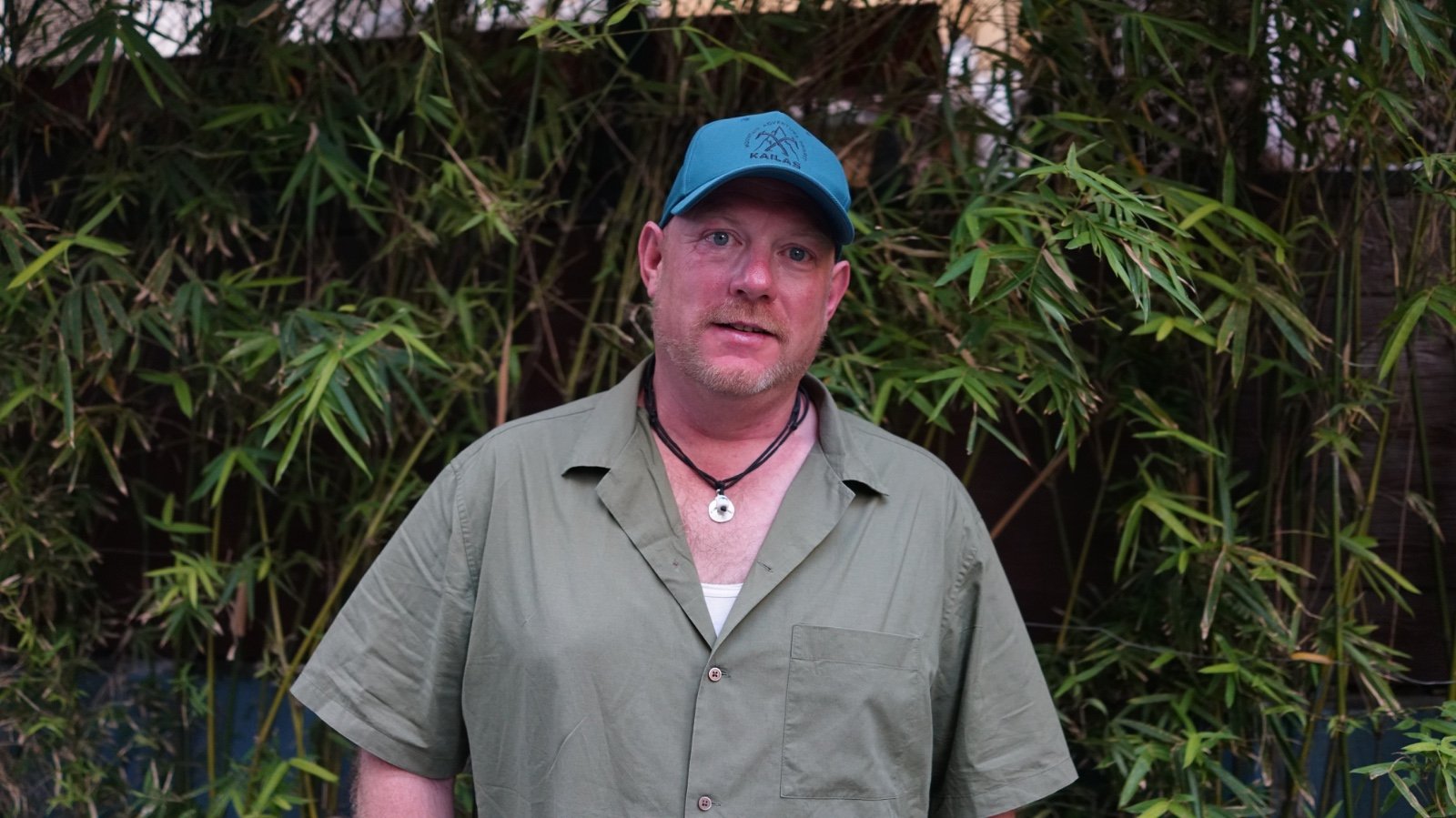
Anish Dahal

Kathmandu : There is a photograph that Arnold Coster does not need to take. He has been there so many times that the view from the upper slopes of Everest no longer needs documenting. On the first day of June 2021, while the rest of his team moved through the death zone toward the summit, he stayed at Camp IV at 7,906 metres, brewed tea, and waited. One by one, all eight of his clients came back down. Every single one of them had stood on top of the world. Arnold had not.
He describes it as one of the best days of his professional life.
This is not an adventurer who measures success by personal glory, and it never really has been. Over the course of a career spanning more than two decades, close to one hundred expeditions, and five of the world’s fourteen Eight-Thousanders, Arnold Coster has developed a philosophy of high-altitude leadership so precisely worked out that it reads almost like an engineering principle. Which, given his background, is perhaps not entirely a coincidence.
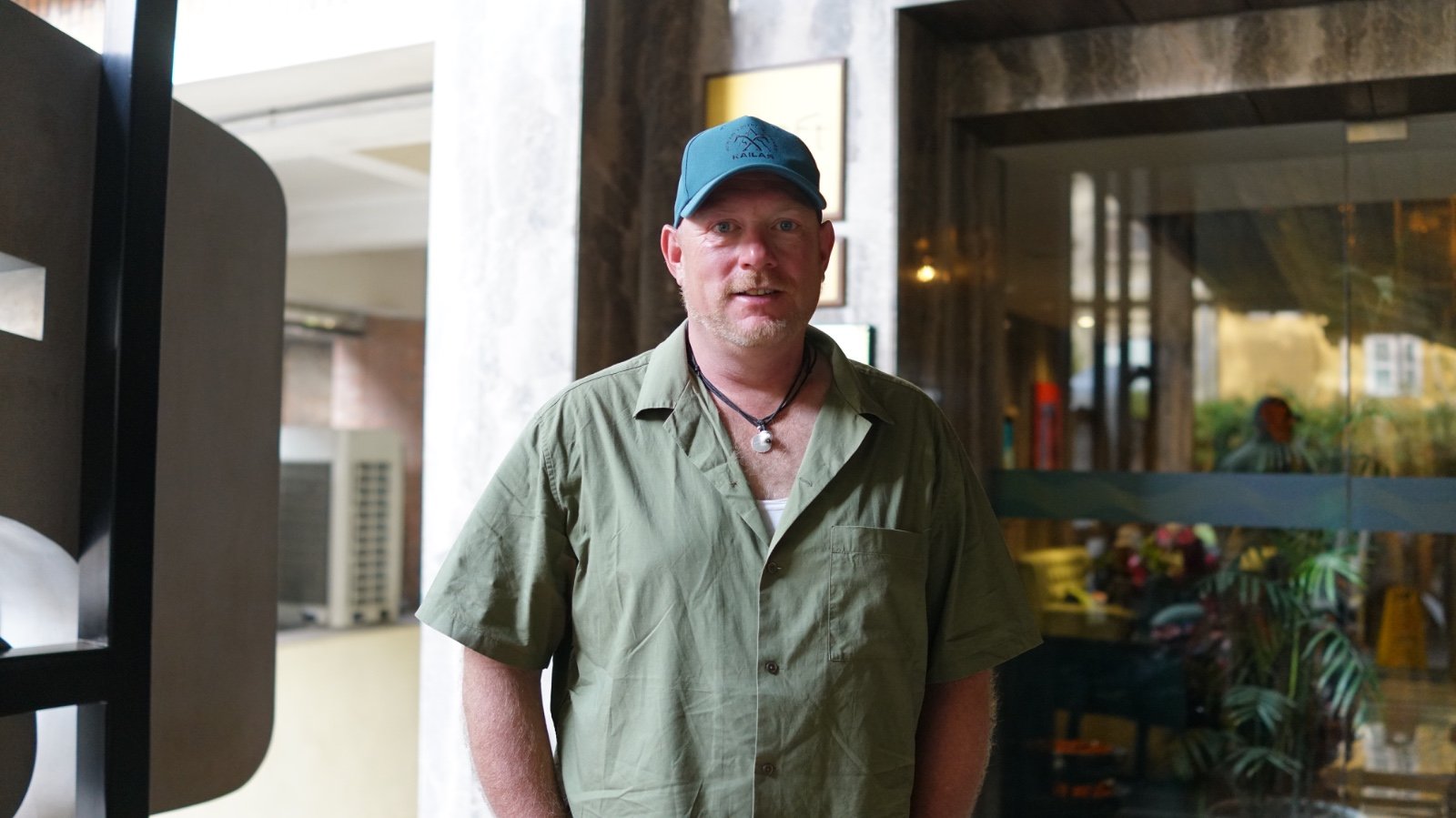
From Schiedam to the Summit
There are no mountains in Schiedam. The city sits on the western edge of the Netherlands, flanked by the river Nieuwe Maas and the flat, sky-heavy geometry of South Holland. It is not an obvious place to produce one of the Himalaya’s most seasoned expedition leaders. But Arnold Coster, born there in 1976, was drawn to elevation from the time he was old enough to notice it.
“I remember being on holiday in the Alps with my parents from four years old,” he recalls.
“We always went camping and there used to be climbers on the campsite. I was always fascinated by their equipment. My parents took me on hikes and from a very young age I told my mother: I want to live in the mountains.”
He did not wait long to act on that. At fifteen, he signed up for a multi-pitch rock climbing course in the Verdon Gorge in southeastern France, one of Europe’s most dramatic limestone canyons, where walls drop hundreds of metres into water the colour of turquoise glass. The course introduced him to the discipline of vertical movement and he was, as he puts it simply, hooked. A few years later, still in his teens, he and a friend went to attempt Mont Blanc. They had limited technical preparation and, by his own cheerful admission, figured they would learn the necessary skills on the way. They summited. Something settled into place.
Through his twenties, Coster trained as a mechanical engineer, completing his studies at MTS Prinseland in Rotterdam and HTS Rijswijk. He also continued climbing obsessively throughout the Alps and, increasingly, in South America, where the Andes gave him his first sustained experience of altitude and the kind of physical commitment that mere technical skill cannot substitute for. He added a wilderness first aid qualification and an advanced rescue certification.
By the early 2000s, the Alps felt like preparation for something larger. He looked east. “Going to the Himalaya was a natural progression,” he says, “but climbing there is far more costly than other ranges. My work as an engineer on projects abroad gave me the money and the time to go on my first Himalayan expedition.”
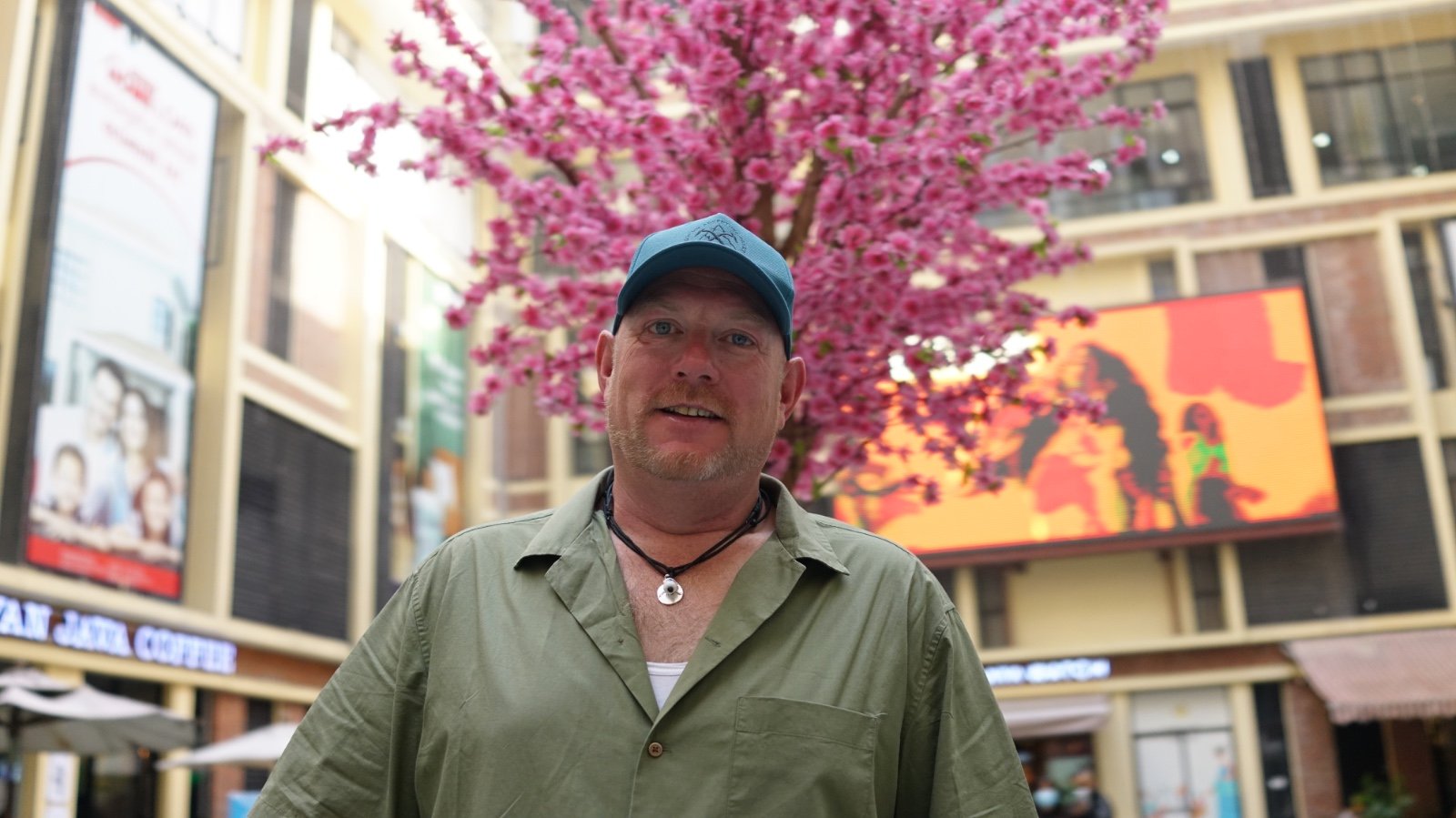
In 2003, he booked a place on a Manaslu expedition led by the American operator Dan Mazur of SummitClimb. He chose Manaslu partly because it was, at that time, one of the least climbed of the Eight-Thousanders, the fourteen peaks above 8,000 metres that represent the outer edge of the world’s vertical geography. He was not expecting to go back to Nepal soon. He did not anticipate what would happen on the mountain, or what it would set in motion.
“Still the best expedition I have ever been on. We got totally beaten up and it lasted almost seventy days. Being part of that expedition made me who I am today.”
The 2003 Manaslu expedition did not go smoothly. Nepal was in the grip of a Maoist civil war and the political atmosphere was volatile. The climb was long, physically savage, and the team was tested repeatedly by conditions and setbacks. They did not summit. But Coster discovered something about himself on that mountain that no amount of Alpine climbing had revealed: he had, naturally and without trying, become the most composed and capable person in the group. He had good instincts with people. He had an ability to read situations. He had, in the language of the mountains, what you need.
Dan Mazur noticed.
The Job Interview at 8,849 Metres
In the spring of 2004, Mazur invited Coster to join an Everest expedition via the North Col route from Tibet as an assistant leader. The terms were straightforward: if Coster summited, he could join SummitClimb as a fully employed expedition leader. He would get to live in the mountains.
“In a way, Everest was my job interview,” Coster says. “All I needed to do was summit and I could live the life I wanted.”
The expedition accumulated setbacks from early in the season. By late May, most of the team had either summited or turned back, and the mountain was emptying out. Coster found himself at Camp 3 at around 8,300 metres with two Sherpas, officially heading up to clear the camp of equipment. The weather was extraordinary, the kind of high-pressure window that opens briefly and without warning on the high Himalaya. They looked at each other, looked at the sky, and made a decision.
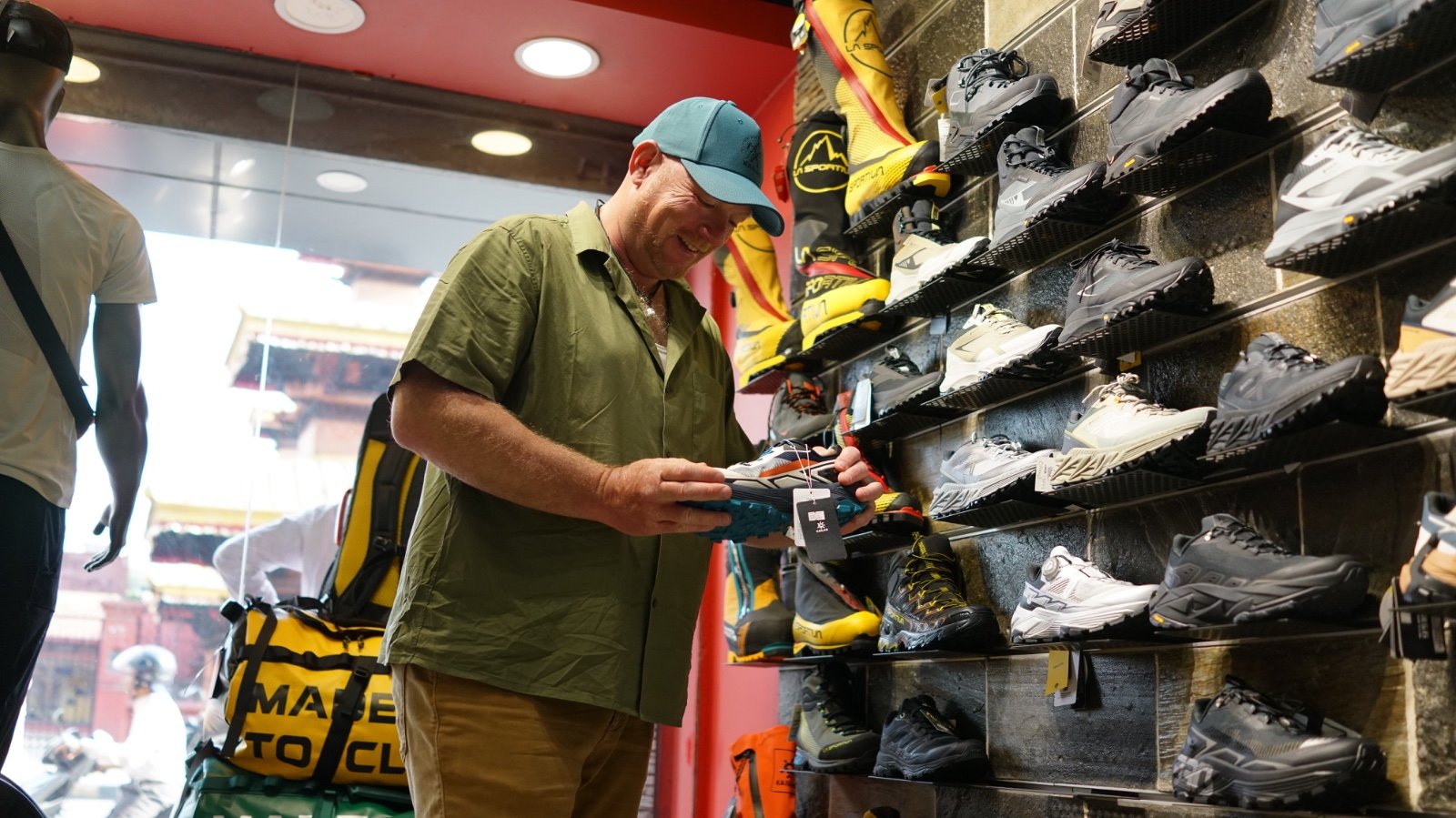
“We were the only people left on the mountain and decided to give a shot. We summited in gorgeous weather and on the way down I couldn’t keep up with the Sherpas. I was fine and sent them down ahead of me. From that moment I was the only person left on Everest. Entirely alone. The feeling of freedom I can’t describe.”
He got the job. He moved to Kathmandu that same year and has lived there ever since. He was twenty-eight years old, and he had just started the education that would define the next two decades of his life.
Kathmandu in 2004 was, by every account, a very different city from the one that greets expedition teams today. The Maoist conflict was still actively reshaping Nepali society. Thamel, the tourist and climbing hub, was a place where normal rules had a loose grip. “The police were not in control and everything was allowed,” Coster recalls. “There were bars like Tom and Jerry, Northfield, New Orleans, Sam’s, where climbers frequently met. There was no internet, so travellers would meet in the internet cafes. There were a handful of tourist restaurants and only one place with fresh coffee. Everything was far more social. People knew each other and spent time in the same places.”
It was a community built on shared risk and genuine information scarcity. You had to know what you were doing, or know someone who did. Coster thrived in it.
The Hard School: 2004 to 2013
The ten years Arnold Coster spent as senior expedition leader for SummitClimb represent a level of Himalayan immersion that very few people of the industry have matched. He was leading four to five expeditions per year across an expanding geography: Everest repeatedly from both the south and north sides, Cho Oyu six times, Shishapangma, Baruntse, Lhotse, Dhaulagiri, Gasherbrum I and II in a single Pakistani summer, Mustagh Ata in the Karakoram, Khan Tengri in Kyrgyzstan, Kilimanjaro by multiple routes, Mount Kenya, and Aconcagua three times. He was averaging around 250 days a year at altitude.
“Dan Mazur threw me in the deep end with very limited resources, which was probably the best school I could ever have had,” Coster says. “As a leader I needed to do everything: buying all the supplies, packing the expedition, guiding difficult clients, hiring Sherpas and hundreds of porters, dealing with tragedy and setbacks. I learned everything during that period. I am who I am today because of it.”
The Sherpas were as central to that education as any mountain. Coster names two in particular: Jangbu Sherpa from Patale and Lakpa Sherpa from Karikola, both of whom worked alongside him through some of his most demanding expeditions. “They never let me down,” he says simply. “Without them, I would never have managed.” He spent years learning Sherpa culture, its codes of loyalty, the unspoken protocols of high-altitude teamwork, the particular kind of trust that only forms between people who have depended on each other in extreme conditions. The Sherpas began calling him “Bhena”, a Nepali term meaning brother-in-law, carrying with it a warmth and belonging that goes well beyond a professional title. He considers it one of the genuine honours of his career.
It was also, inevitably, a decade in which he encountered death and made the decisions that only people who operate at the frontier of what is physically possible are ever required to make.
In 2010, Coster was on Makalu, the fifth-highest mountain on earth at 8,485 metres, a steep and technically demanding pyramid of dark rock on the border between Nepal and Tibet. That season, he became the first person from the Netherlands to summit it. But the experience is not one he recalls primarily through the lens of national record-breaking. “I never intended to climb Makalu as the first Dutch person,” he says. “That kind of record is meaningless to me.” He had seen the mountain’s skyline while climbing Baruntse two years earlier and had been drawn to it purely for its beauty. “The skyline of Makalu is just amazing and makes you want to climb it.”
The climb was one of the hardest he has done. The team waited through a long period of high winds with no rope-fixing team available, working out routes in collaboration with other teams through genuine improvisation. Temperatures dropped to minus 48 degrees Celsius at the summit. And during the expedition, a member of the team lost his life. Coster was also required to perform an emergency medical intervention to save another climber who had developed a pneumothorax, a collapsed lung, at altitude.
“There is no choice. We could only improvise. After Makalu I quit climbing for eight months and went to work as an engineer in Dubai. But the mountain kept calling and I can’t change who I am.”
He stayed away from the mountains for eight months. He took an engineering contract in Dubai and resumed what had been his earlier professional life. But he could not hold that life. The draw was too specific, too fundamental. By the time he returned to Nepal, he understood something he had perhaps only half-known before: this was not a career he had chosen so much as one he had been built for.
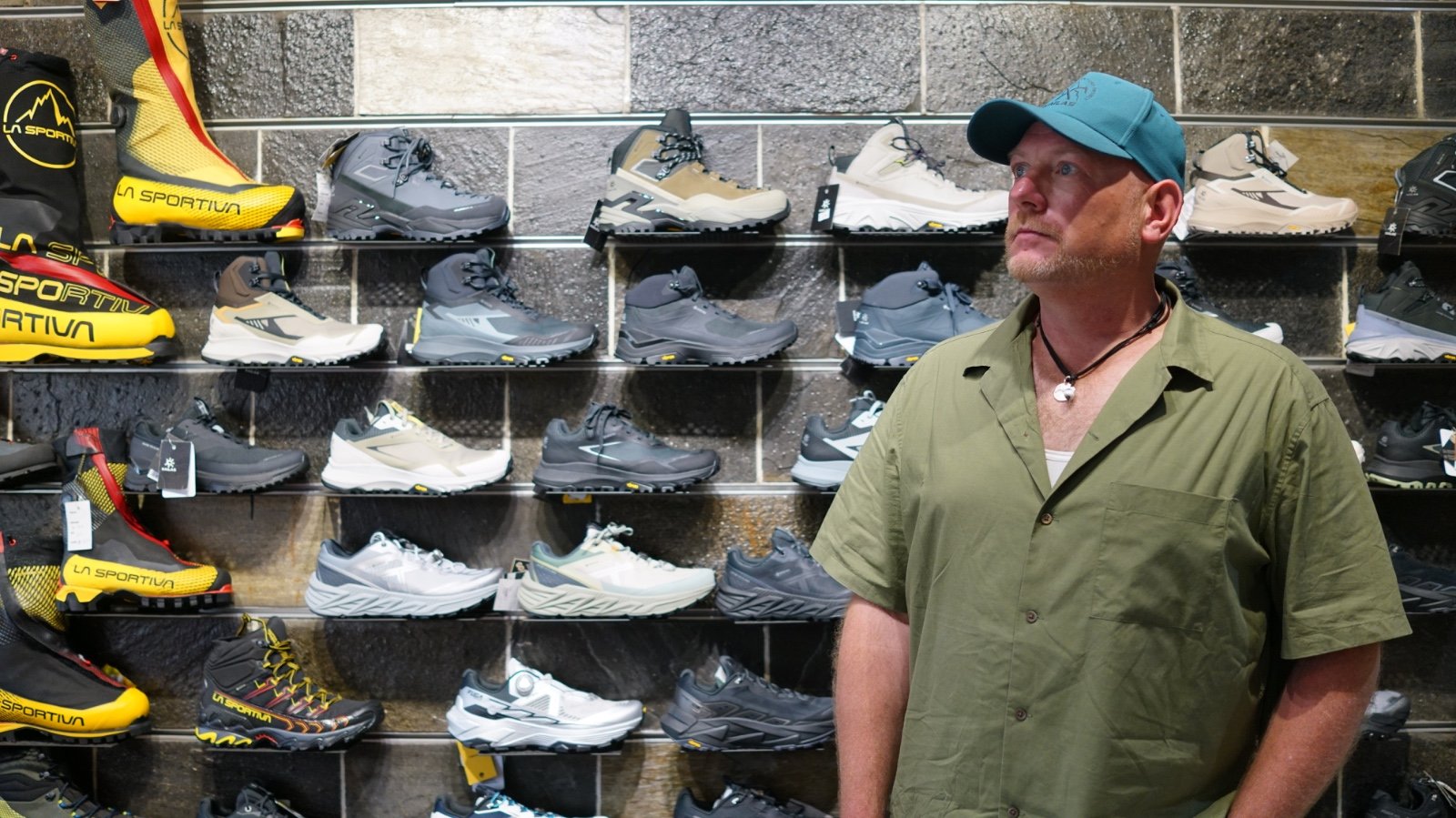
Arnold Coster Expeditions: A Company That Looks Like Its Owner
In 2013, after exactly a decade with SummitClimb, Coster left to found his own operation. Arnold Coster Expeditions was built from the beginning on a philosophy that is, in the context of the commercial Himalayan industry, deliberately understated. No inflated success-rate statistics. No high-production marketing videos. No group sizes pushed to the limits of manageability. The company operates on the principle that the best thing you can offer a client is honest leadership, direct communication, and the presence of someone who actually knows the mountain you are standing on.
“When you contact Arnold Coster, you will immediately notice his down-to-earth mentality,” the company website reads, in a sentence that could only have been written by someone either deeply self-aware or completely without pretension. In Arnold’s case, it is both.
The business model is what the industry calls a boutique operation. Teams are small. The service ranges from base-camp-only logistics for experienced self-sufficient climbers, to full-service expeditions where Arnold is present on the mountain from the first acclimatisation rotation to the summit push. He has five permanent staff and has built his team around Senior Sirdar Jenjen Lama, an NNMGA-certified guide with six Everest summits, twelve ascents of Ama Dablam, international medical qualifications, and a calm authority that Coster credits as essential to every expedition.
The company also maintains a strategic partnership with Seven Summit Treks, which provides logistical capacity across all fourteen Eight-Thousanders and their optimal seasonal windows. It is a collaboration that gives a small boutique operation the reach of a much larger one, without sacrificing the intimacy that makes Arnold Coster Expeditions what it is.
The expeditions on offer reflect Coster’s own climbing history: Everest from both the south and north, Manaslu, Ama Dablam, Cho Oyu, Lhotse, Baruntse, Carstensz Pyramid in Papua, Aconcagua, Kilimanjaro, Bolivian peaks. Each is offered with the same underlying commitment: that the leader you read about on the website is the person who will be on the mountain with you.
The Crux Is Never the Mountain
Ask Arnold Coster what the hardest part of his job is and he will not mention crevasses, weather windows, or altitude sickness. He will talk about people.
“For me, climbing is a spiritual journey,” he says. “It is about adventure, travel, making new friends and seeing new cultures. The summit is a bonus, but the journey is the adventure.” He describes the ideal client with something close to affection: “A humble, self-taught climber. Someone who is open to suggestions but self-reliant. A team player who understands that the group’s success is ultimately their individual success.”
The management of a high-altitude group is, he says, where the real complexity of expedition leadership lives. Different nationalities, different experience levels, different psychological relationships with risk and ambition, all thrown together in conditions of genuine physical stress. “My expeditions are like the United Nations,” he says. “I usually have a mix of climbers, which is never boring.”
His framework for making decisions on the mountain is built on experience accumulated across close to one hundred expeditions and has never been written down in any formal way. It is, in his own description, a feeling, a language the mountain speaks and that he has spent decades learning to read. “The mountain talks in clouds, sunshine, wind, temperature, snow. Take the time to learn their language.” He has a set of personal rules, developed over years, that he will not break regardless of external pressure. He has watched other people break theirs. He has seen what follows.
The winter K2 expedition of 2021 was the most public demonstration of this philosophy. Coster was part of a large international team assembled under the Seven Summit Treks banner to attempt the first-ever winter ascent of K2, the world’s second-highest peak and the last Eight-Thousander never to have been climbed in its coldest season. The Kathmandu Post called it Mission Impossible. At base camp, temperatures dropped to minus 30 degrees Celsius. At Camp 2, they fell to minus 40.
“Soms zegt een berg iets tegen je,” he said afterward in Dutch, in an interview with the Dutch Alpine Club. Sometimes the mountain says something to you. Then you should not do it.
He had spoken in base camp about timeframes and safety protocols. He had watched some members of the wider team move too slowly between camps in conditions where such slowness carries a specific cost. He stayed at Camp 2 and then returned to base camp. The summit was eventually achieved, making history. But two climbers died in the attempt. Coster had the task of telling one of their partners, present at base camp, that her companion was not coming home.
“I am to much willing, but I don’t climb myself to death for someone else,” he said. “Every mountain athlete has a set of conditions in their mind that makes it acceptable for them. Never break those rules.”
“The crux for me is the group, not the mountain. I can be completely happy without reaching the summit myself. Success, for me, is the satisfaction of the people I bring with me.”

The 2021 spring Everest season illustrated the opposite side of this discipline: the reward of patience. It was one of the most disrupted seasons in recent memory, with multiple teams retreating from the mountain due to illness and two successive typhoons loading the upper slopes with dangerous quantities of new snow. Most commercial operators called off their summit bids. Coster waited.
“I managed to persuade my team to wait,” he says. “As long as we wait there is a chance. We were the last team to summit on a wonderful day without traffic and without drama, and I managed to get the entire team on the mountain.” By statistical measures, the 2021 spring season was among the worst of the past two decades. By Coster’s measure, it was his most successful. Every client reached the top. Everyone came home.
A Life Built at Altitude
Arnold Coster has lived in Kathmandu since 2004. The city is, for most foreigners, a place of transition, a stop on the way to somewhere higher. For Coster, it became home in a way that is rarely reversible. He doesn’t consider himself as an outsider merely living in Nepal but has immersed himself in it. Many highs and lows he expresses he has faced and overcame being based in Nepal.
The COVID-19 pandemic gave the family its most difficult period since Coster established his company. When Nepal closed its borders in early 2020, the expedition and trekking industry did not slow down. It stopped entirely. The social safety nets that might have cushioned the blow in the Netherlands simply do not exist in Nepal in the same form. “Thousands of people died,” Coster says, “not so much from COVID, but from hunger, because there was suddenly no work.” He kept paying his staff for as long as he could. When the savings ran low, he flew back to the Netherlands and worked as a construction labourer to generate income. There is something very Rotterdam about that solution: no sentimentality, no self-mythology, just the work that needs doing.
The K2 winter expedition in late 2020 and early 2021 was in part a financial necessity. It brought his team back to work. It brought him back to the mountains. And it brought him, on a particularly brutal evening at base camp beneath the world’s most unforgiving peak in its most unforgiving season, face to face with the cost of the work he has chosen.
What the Mountains Still Have to Offer
Twenty-three seasons into his Himalayan career, Arnold Coster is not slowing down. He is recalibrating. The great Eight-Thousander circuit, the commercial spine of the high-altitude industry, feels like familiar ground now, both literally and philosophically. He has begun to think about other kinds of mountains: smaller, less documented, harder to find on a standard expedition brochure.
“I am a boutique climbing company,” he says of where things stand now. “I will always run expeditions with small groups. I will offer the commercial expeditions clients ask for, but also try to add some new adventures into the mix.” He has spoken privately about K2’s North Ridge from the Chinese side, a route he has long wanted to attempt on his own terms. He has expressed interest in being part of any serious attempt on a major unclimbed objective, mentioning the so-called Fantasy Ridge on Everest’s east face as the kind of goal that still excites him. He has a dream involving Antarctica: a sailing approach, a sea-to-summit ascent of Mount Vinson entirely under his own power, a thing no one has done.
He watches the contemporary Himalayan industry with the clear eyes of someone who helped build it and is not entirely comfortable with everything it has become. Climbers, he observes, arrive with less experience and less preparation than they once did. The abundance of digital information has, paradoxically, made people less willing to invest in understanding. The social media version of high-altitude mountaineering bears an uncertain relationship to its reality. “Almost nobody portrays the truth,” he says. “Client expectations are often unrealistic. It is our job to inform clients better, instead of always trying to be the best-looking company. We are losing credibility by not telling the full truth.”
He is particularly troubled by what overcrowding is doing to the mountains themselves. “Because of overcrowding, the sport is losing its adventure image. The value of the achievement is decreasing. The impact on the fragile mountain environment is huge.” He pauses, and then says something that sounds, from a man who has spent his career leading paying clients to the highest places on earth, like genuine alarm: “I believe we are destroying our mountains and we cannot continue like this.”
What sustains him, through all of this, is not the summits or the statistics or even the company he has built. It is something simpler and harder to quantify.
“I just love the mountains,” he says. “And teaching people my passion for these mountains. I feel happiest when I feel connected with nature.” He describes his most vivid moments of happiness in the high places not as summit days but as instants of elemental stillness: the sun on his face at altitude, a warm rock to sit on, meltwater running clear from the ice. “When I am able to connect to nature like this, I am a happy human being.”
He is fifty years as of 2026, still going out five months or more of every year, still finding the mountain quieter and more honest than most of what happens at its base. He cannot imagine settling in one place for more than a month without growing restless. He says, with the confidence of someone who knows his own nature very well by now, that this will be true after his sixty-fifth birthday too.
“The mountains have been standing there for millions of years. It is us, people, who create the drama. But we are all children of the mountains. We all chose to go there voluntarily.”
In the end, that is the animating idea beneath everything Arnold Coster has built: a belief that the mountains are not obstacles to be conquered or backdrops for personal branding, but a language to be learned, patiently, over a lifetime, by people willing to take the time. He has been learning it since he was four years old, standing at the edge of a campsite in the Alps, watching climbers sort their equipment, wanting something he did not yet have words for.
He knows the words now. He has spent twenty-three years teaching them to others.
Arnold Coster is the founder and senior expedition leader of Arnold Coster Expeditions, Kathmandu, Nepal.
He leads expeditions across the Himalaya, Karakoram, Andes, and Africa.
www.arnoldcoster.com · @coster.arnold · info@arnoldcoster.com
based on an interview with Arnold Coster during the Spring of 2026.