







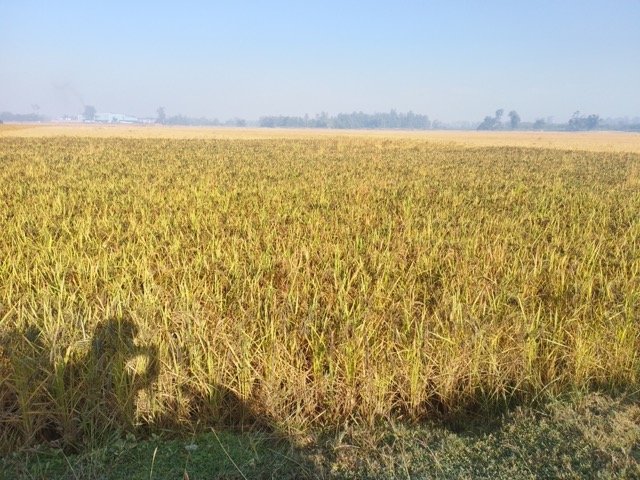
Kathmandu, June 29: Growing urbanisztion in Kathmandu Valley has led to a shrinking space for rice plantation, said farmers. Speaking at a programme organised here on Monday by the Tokha Municipality on the occasion of the 23rd National Paddy Day, local farmers expressed their concern over a shrinking area for rice plantation.

Farmer Kedar Bidari from Tokha said that the size of arable land is shrinking not only in Tokha but also in the Kathmandu Valley. “Kathmandu Valley is a highly fertile region. However, rapid urbanisation has resulted in the significant loss of its arable land,” he said. Another farmer from Tokha, Sambal Shrestha, said the growing trend of constructing houses on arable land has led to the gradual disappearance of the paddy plantation culture.
In recent years, the expansion of urbanisation has led to the growth of unplanned settlements, with arable land being converted into residential plots. As a result, , the area for paddy planation has been shrinking, directly affecting rice production and posing a threat to food security, they said. Similarly, youths’ increasing attraction to foreign employment, the lack of sufficient irrigation facilities and limited availability of hybrid seeds and fertilisers and plotting of arable land have adversely affected paddy plantation and thus its production.
Tokha Municipality’s Agriculture Section Chief Sumitra Pathak said that at present there is just 400 hectares of arable land inside the Tokha Municipality.
As she said, the local government has prioritised the technology-based agriculture system in the locality along with the smooth supply of fertiliser, seeds and plants. It has also encouraged the roof farming (known as Kausi Kheti).