











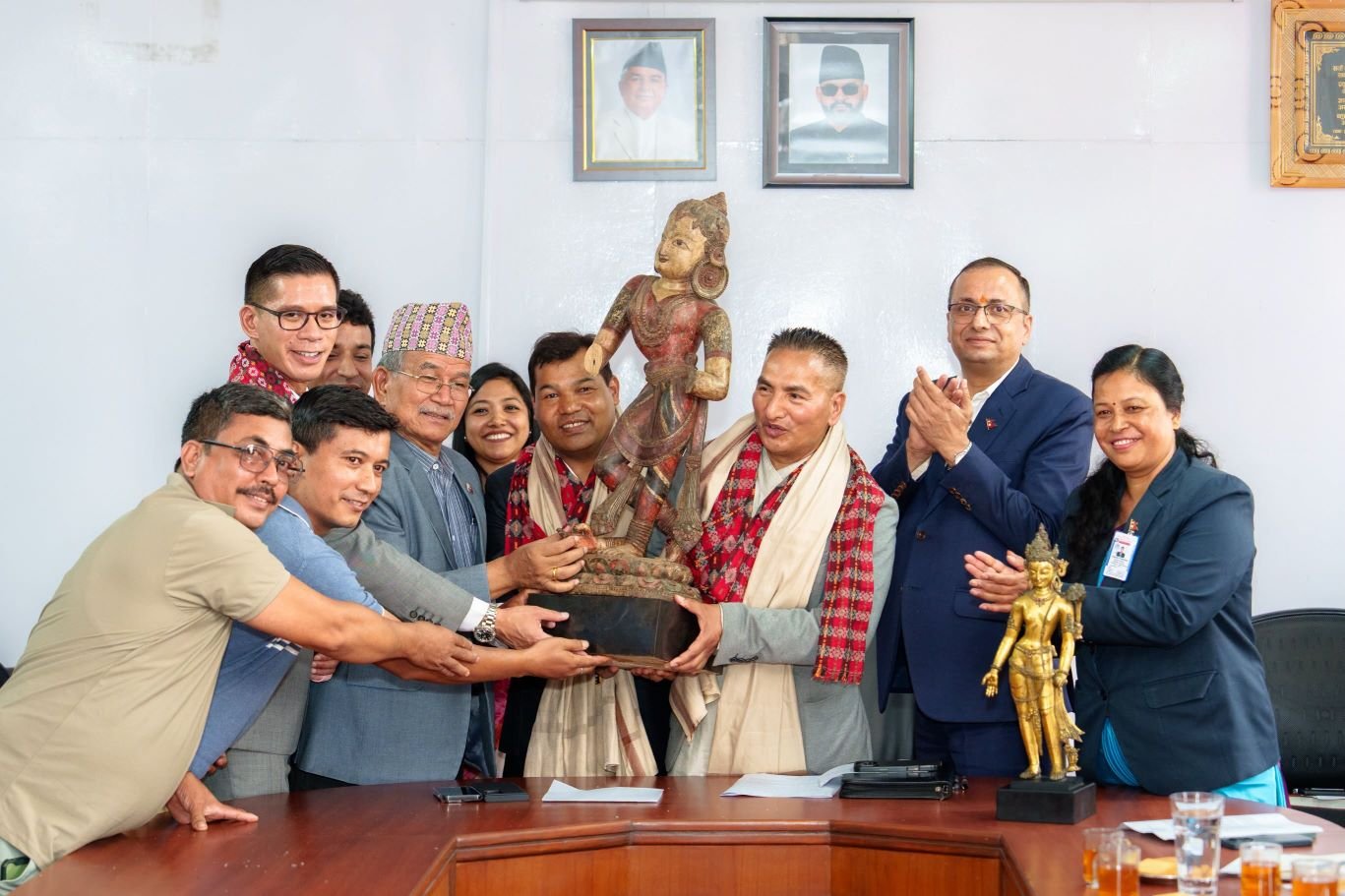
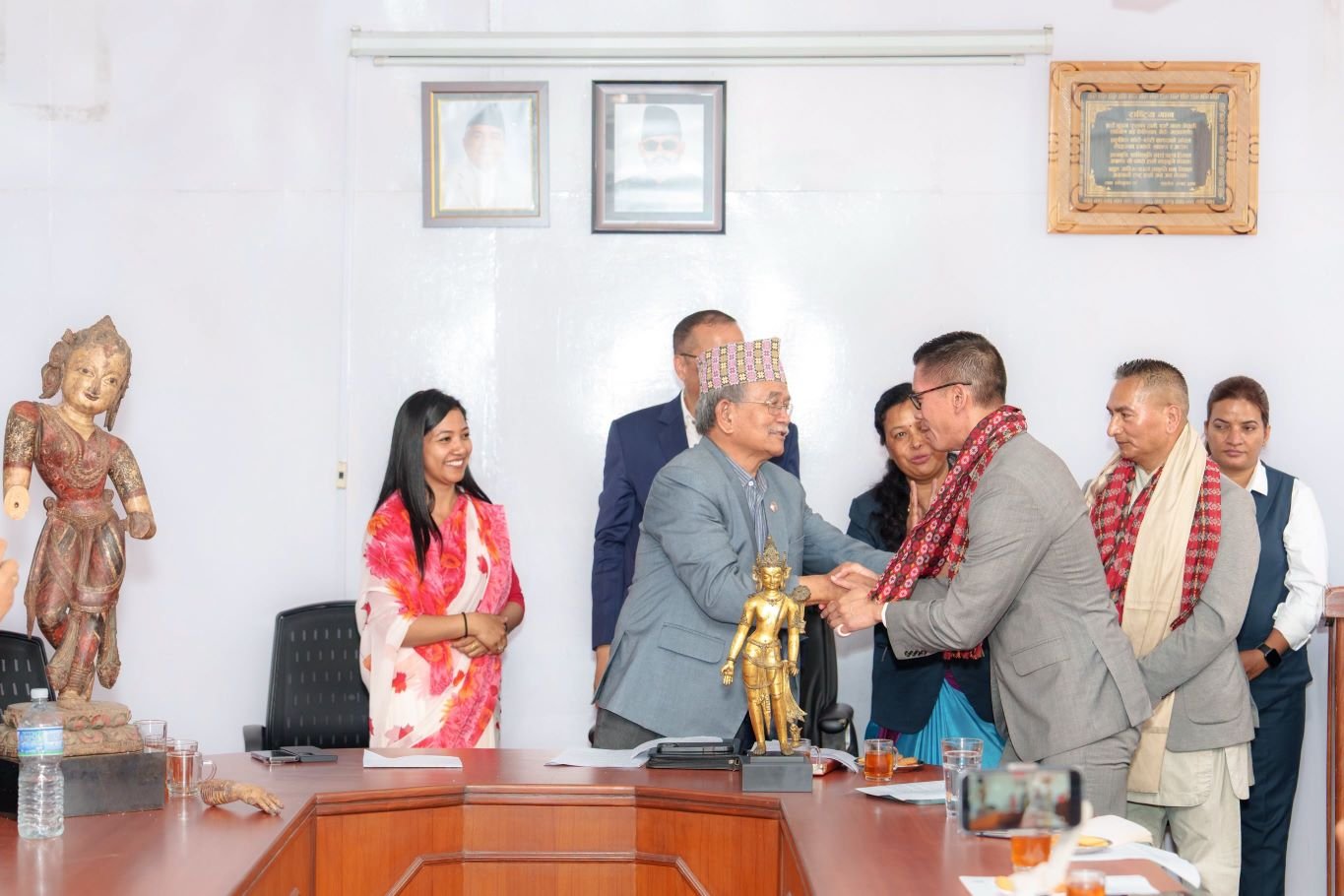
Kathmandu, Nepal — Nepal marked a significant milestone in the preservation of its cultural heritage as two sacred artifacts were officially returned during a repatriation ceremony hosted by Nepal’s Department of Archaeology.

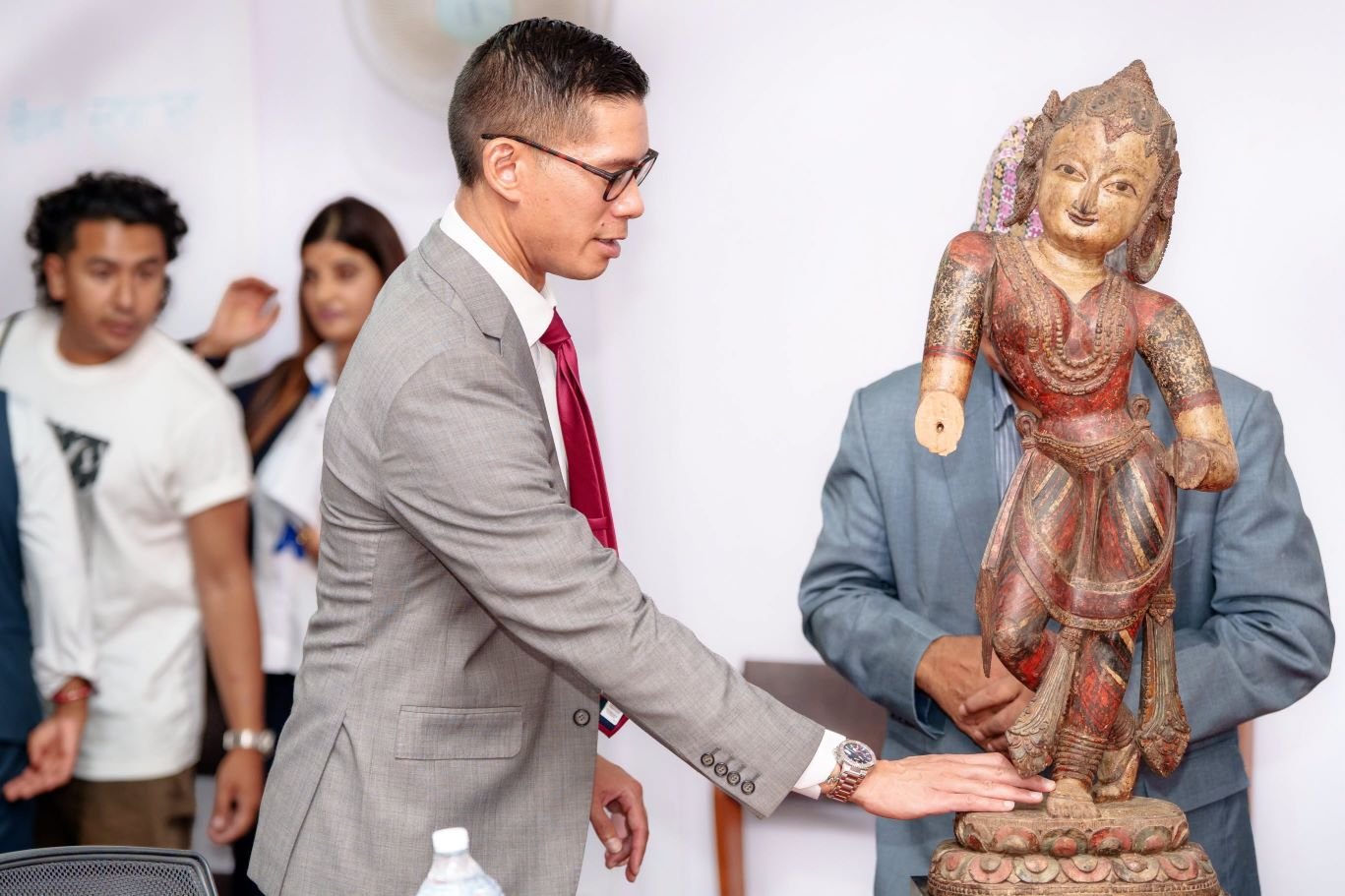
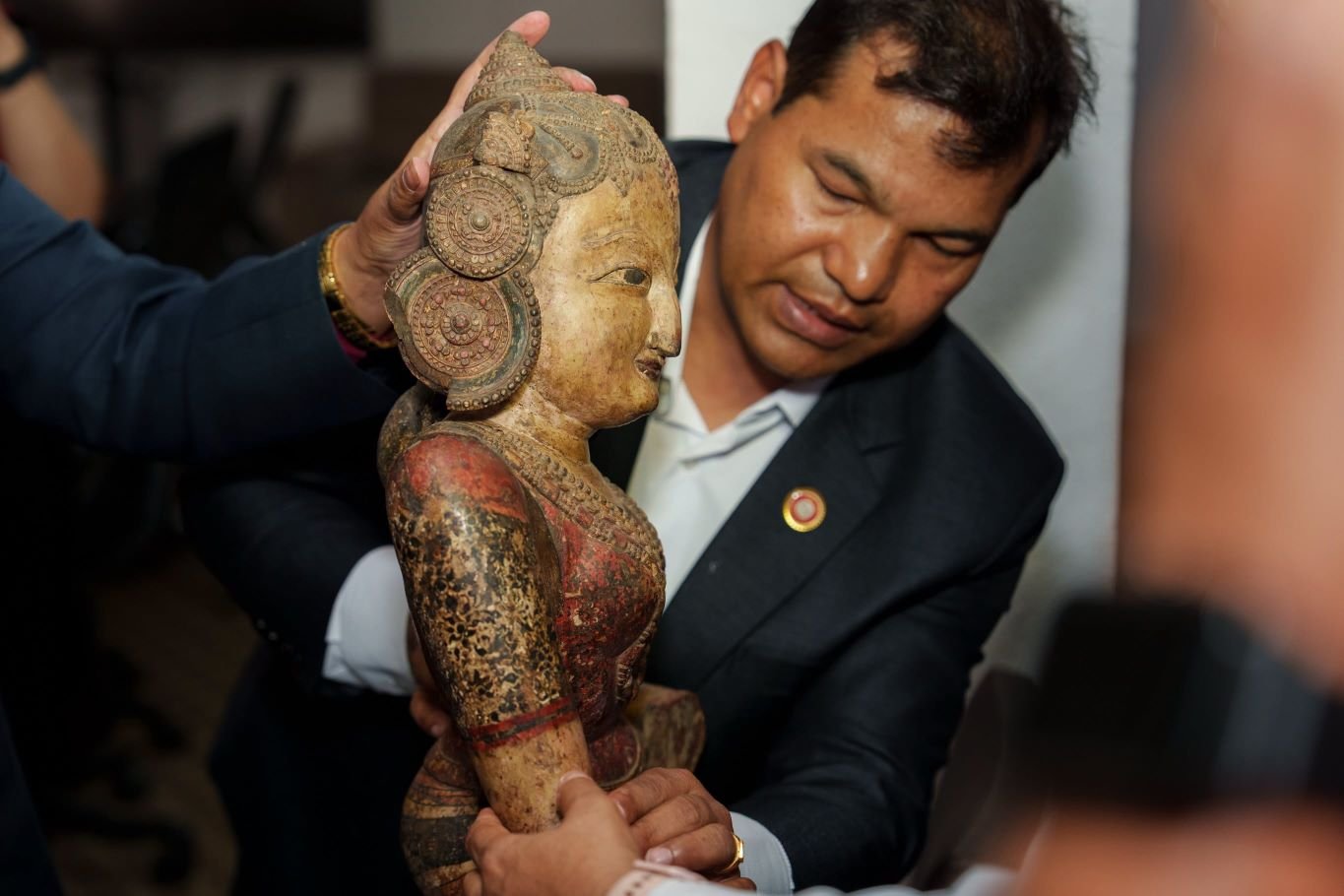
The returned treasures include a 13th-century gilt bronze Padmapani and a 16th-century polychromed wooden Nrityadevi, both of which hold immense historical, religious, and artistic significance.
The repatriation reflects the longstanding partnership between Nepal and the United States in combating the illicit trafficking of cultural property and restoring stolen heritage to its rightful communities. The recently enacted U.S.-Nepal Cultural Property Agreement further strengthens bilateral cooperation by providing a robust framework for joint investigations, trafficking prevention, and the protection of Nepal’s invaluable cultural heritage.
Speaking at the ceremony, U.S. Public Affairs Chief Mike Harker stated, “To date, 127 Nepali antiquities have been returned from the United States to their rightful homes in Nepal. The return of these two sacred statues further demonstrates how criminal investigations, diplomatic cooperation, and community advocacy can successfully disrupt antiquities trafficking networks. The new Cultural Property Agreement will strengthen future collaboration and help safeguard Nepal’s sacred heritage from the illicit market.”

The Government of the United States congratulated the Government and people of Nepal on this important achievement and reaffirmed its commitment to working closely with Nepal to preserve the country’s rich cultural legacy, uphold the rule of law, and protect its historical treasures for future generations.